Lightkeeper's Cottage: A Historical Gem on Newcastle Harbour
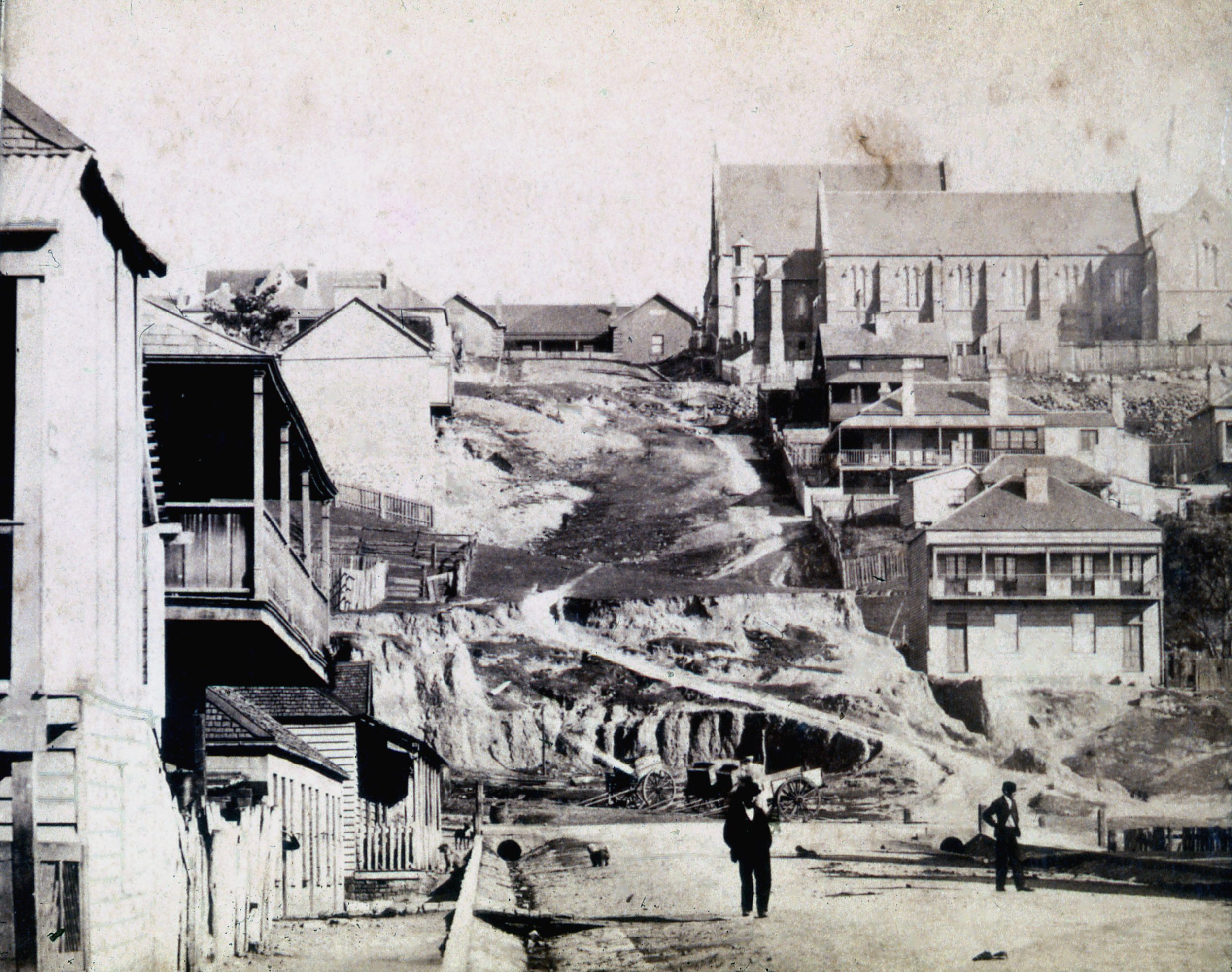
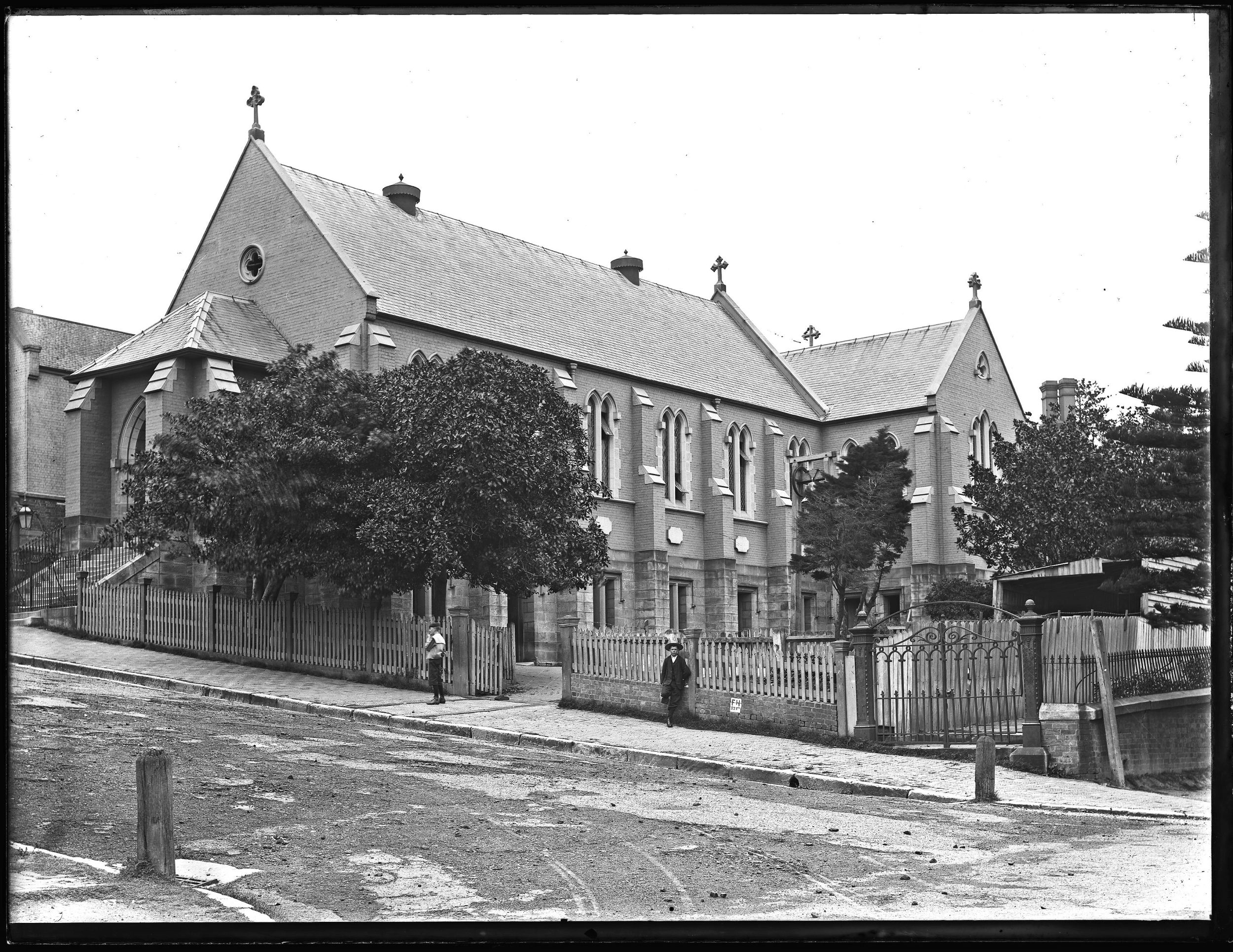
![St Mary's Star of the Sea Church and Leading Light Tower Perkins Street | Sydney Mail engraving 1894 [Trove] showing the lower of Newcastle's two leading light towers demolished in 1933.](https://lostnewcastle.com.au/wp-content/uploads/2026/06/Screenshot-2026-06-26-at-10.39.55-am-1.png)
Two Towers and a Treacherous Harbour
To understand the house, you need to understand what the keeper was keeping. In the mid-19th century, navigating into Newcastle Harbour was genuinely dangerous. The coast around Newcastle is littered with hundreds of shipwrecks, and the Oyster Bank, a notorious shallow sandbank near the harbour entrance, claimed ship after ship. The solution was a pair of leading light towers, built in 1865 on the hill above the city and brought into operation in May 1866 under the direction of Captain David T. Allan, Newcastle's Harbourmaster. Allan had held the role since at least 1858, when he appears in official correspondence signing off on harbour works, and he remained a central figure in the port's affairs for decades. It was Allan who approved the sites for the leading lights in 1863, working alongside Captain Hixson, Superintendent of Pilots, Lights and Harbours, and it was under his authority that the towers were lit for the first time. The towers were designed to work as a system: a ship rounding Nobbys Head would line up the two towers, and when the lights appeared one directly above the other, the captain knew the vessel was on a safe line clear of the reef. The system was simple in principle, though it proved controversial in practice. The towers were only 225 feet apart, and navigators complained that the margin of error was too small for the length of channel they were marking. Ships had to get the lights slightly out of line to come in safely, earning the nickname "the misleading lights." Just weeks after the lights were commissioned, on 12 July 1866, the steamer Cawarra entered Newcastle Harbour seeking shelter from a fierce gale and was overwhelmed by huge waves on the Oyster Bank. Sixty people died. It remains one of the worst maritime disasters in Australian history. The new leading lights had not been enough to save her. Captain Allan walked at the head of the Cawarra funeral procession three days later, alongside Dr Brooks and James Hannell, as the bodies of Captain Chatfield and his crew were carried to the Church of England burial ground. Articles claim somewhere between 150 and 4000 people lined the streets from the hospital to Christ Church Cathedral's cemetery. He had commissioned the lights to make the harbour safer. He had just buried sixty people who drowned in it. Allan continued as Harbourmaster into the 1870s and 1880s, remaining involved in port safety through the lifeboat committee. His legacy in Newcastle is quietly enduring: the Port of Newcastle's hopper dredge, which works twelve-hour days seven days a week keeping the harbour channel clear for shipping, bears his name. The two towers were identical in construction but differed in colour. The lower tower, down the hill in Perkins Street near St Mary's Roman Catholic Church, was painted white and showed a red light. The upper tower, higher on the hill at the corner of Brown and Tyrrell Streets, was painted red and showed a white light. Because of the difference in elevation, the lights appeared stacked when seen from the sea. Both towers were designed by M.W. Lewis, the Government Architect, and built in a castellated style with embattled tops. The original towers were only about seven metres tall, which almost immediately caused problems. A new parsonage built nearby obscured the upper tower's light from the heads, forcing alterations. The lower tower was raised by six feet in 1869. By 1877, the upper tower had to be completely rebuilt on the same base to a height of around 20 metres, this time under the direction of colonial architect James Barnet, whose castle-like flourishes gave it the distinctive chess-piece silhouette that stands on the corner of Brown and Tyrrell Streets today.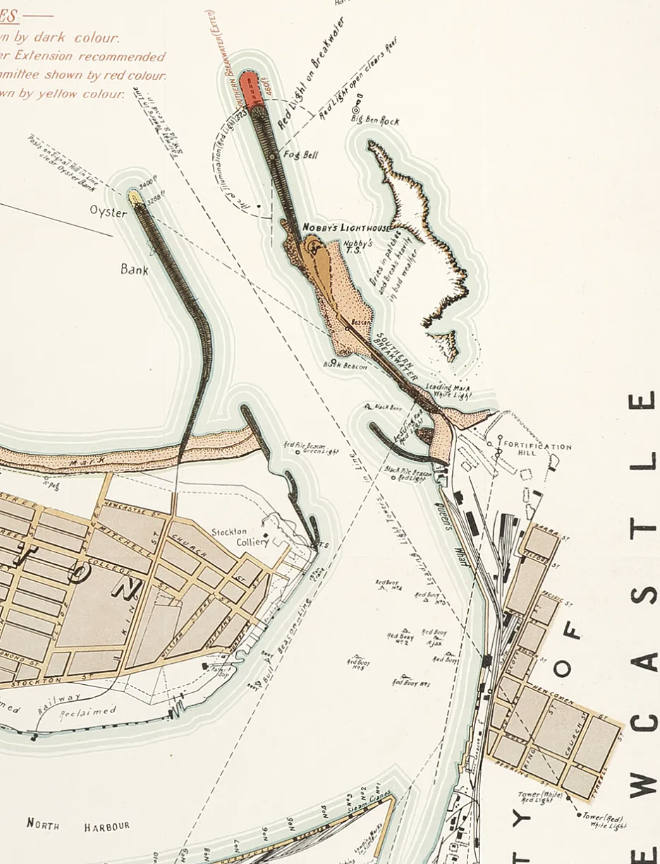
New leading lights were eventually installed in Church Street and on the harbour foreshore in 1917, making the hilltop towers redundant. The Perkins Street tower was demolished in 1933, though its base survives, an underground relic of Newcastle's navigation history. The Tyrrell and Brown Street tower still stands and is now heritage-listed.
The Lightkeeper's Cottage in 2026
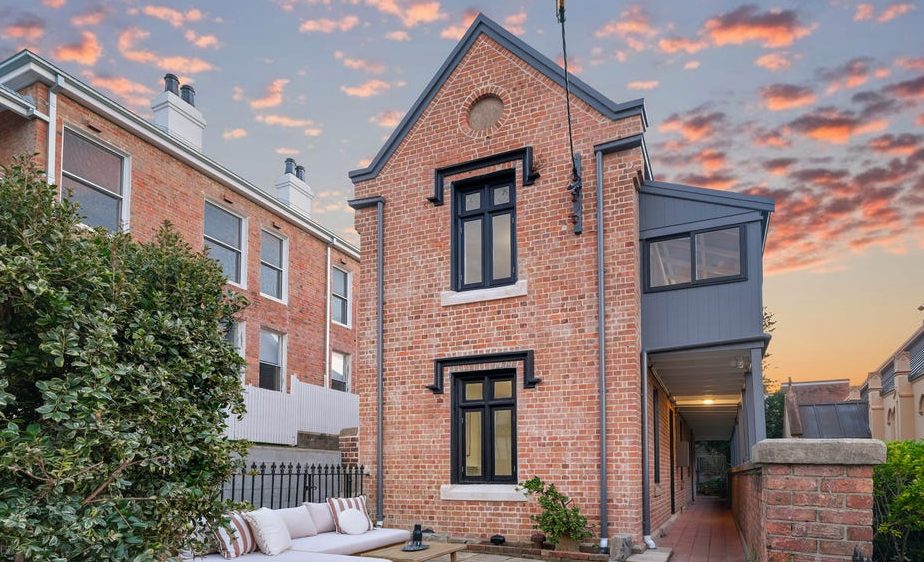
The residence at 54a Perkins Street was built in the same year as the towers, in 1865. It is a triple-brick freestanding terrace on a 191-square-metre block, and it stands out from its neighbours for exactly that reason. Most of the terraces along Perkins, Tyrrell and Brown Streets share walls. This one does not. It sits in an elevated position with a north-facing aspect looking directly over Newcastle Harbour to Stockton, Nobbys Headland and Christ Church Cathedral. For a keeper whose job was to ensure the harbour lights stayed lit and operational through the night, the view was the job.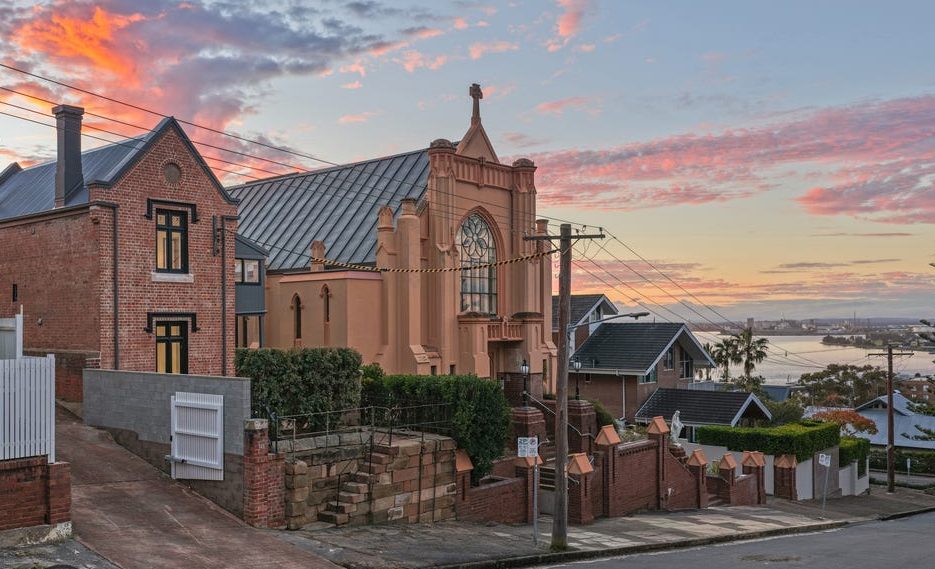
The leading light towers were part of a broader system of navigation infrastructure that included Nobbys Lighthouse (established 1857), Flagstaff Hill (now Fort Scratchley) and the obelisk on Obelisk Hill. Together they represent a period when the colonial government was making significant investment in the port to support coal exports and maritime trade.
What Remains
The castle-like tower on the corner of Brown and Tyrrell Streets is still there, with its distinct lean and its embattled parapet. It has been sealed off at ground level, so any maintenance now requires a cherry picker. But it remains, improbably, as a heritage-listed monument to the shipping era that built this city. Read more about the Leading Light Towers here: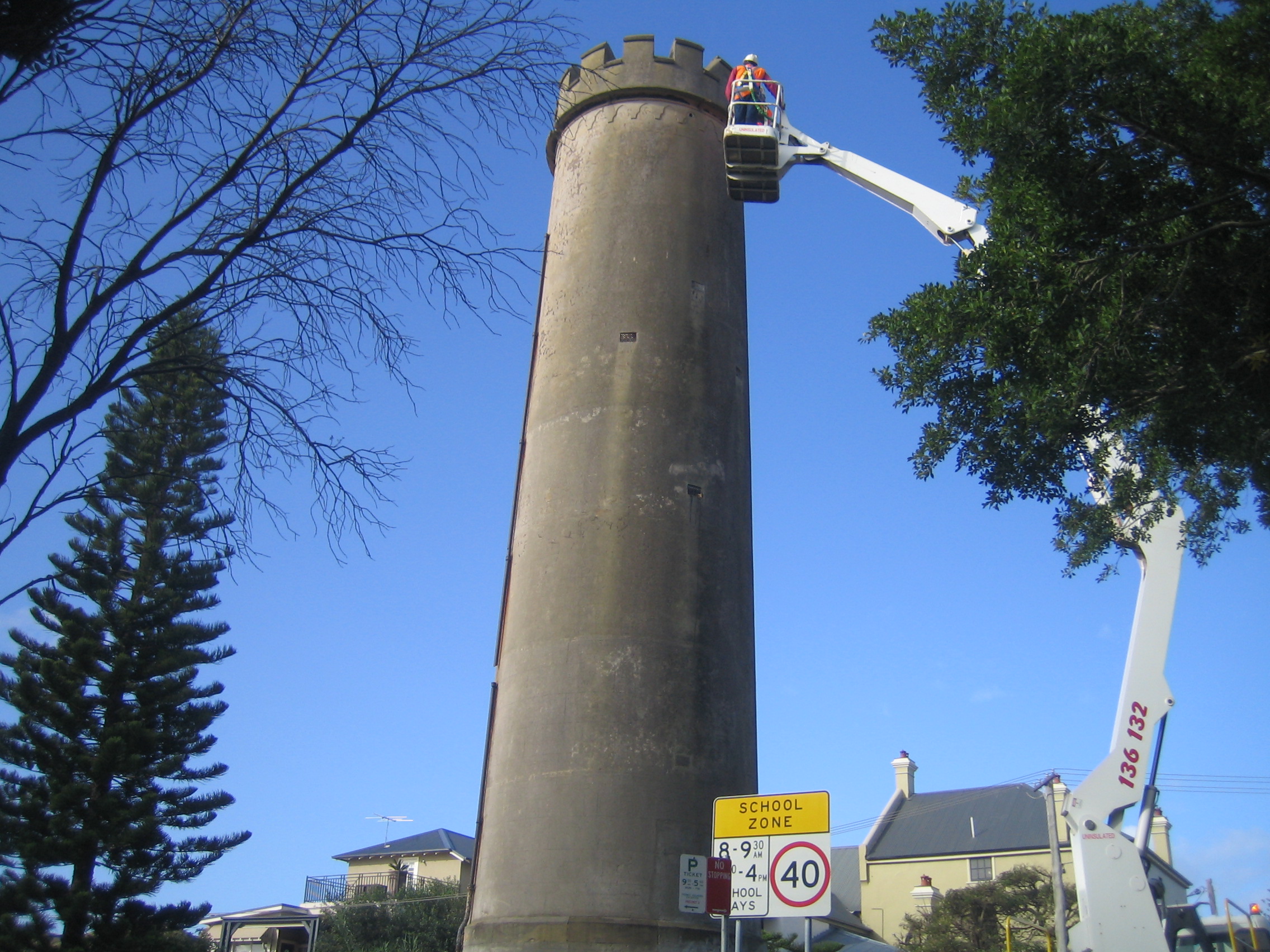
Do you know who the leading light keepers were? Have you ever noticed the base of the old lower tower? Share what you know in the comments.
SOURCES AND FURTHER READING
- Sydney Mail and New South Wales Advertiser, 17 March 1894. Illustration of Perkins Street with leading light tower. Sourced via Trove, National Library of Australia: https://trove.nla.gov.au/newspaper/article/163331288
- Newcastle Chronicle and Hunter River District News, 2 December 1865. Dimensions of the leading light towers.
- Newcastle Chronicle, 25 December 1869. Leading lights raised.
- Maitland Mercury and Hunter River General Advertiser, 27 March 1877. New tower completed.
- Jen Willetts, Newcastle Harbour Lights: https://www.jenwilletts.com/harbour_lights.html
- Lost Newcastle, The Beacon Towers (Carol Duncan with Sarah Cameron, Heritage Strategist): https://lostnewcastle.com.au/the-beacon-towers/
- NSW Government, Leading Light Tower: https://www.nsw.gov.au/visiting-and-exploring-nsw/locations-and-attractions/leading-light-tower
- City of Newcastle, Heritage Conservation Areas — The Hill: https://newcastle.nsw.gov.au/explore/history-and-heritage/heritage-and-development/heritage-listings-and-maps
- Wikipedia, SS Cawarra: https://en.wikipedia.org/wiki/SS_Cawarra
- Wilson Lemke Stewart real estate listing June 2026: https://wiltonlemkestewart.com.au/listing/r2-5141524-54a-perkins-street-the-hill-nsw-2300/

0 Comments